
Scope: New energy vehicles, smart cockpit, three-electric systems and ADAS across the entire value chain
1. Automotive Electronics Industry Overview
1.1 Automotive Electronics Industry Trends
The global automotive electronics industry is undergoing profound transformation. In 2025 the global automotive electronics market exceeded USD 400 billion, with new energy vehicle (NEV) electronics accounting for more than 45%. The four megatrends of the automotive industry — electrification, intelligence, connectivity and shared mobility — are accelerating, driving the electronics share of total vehicle value from 25% in conventional ICE vehicles to over 55% in NEVs.
Electrification has sharply increased demand for thermally conductive, insulating and sealing materials across the "three electrics" (battery, motor, controller), while the shift toward intelligence has created new protection requirements for ADAS sensors, domain controllers and smart cockpit modules. As critical enabling materials, automotive silicones play an irreplaceable role in thermal management, protective sealing and vibration damping.
1.2 Specific Requirements for Silicones in Automotive Electronics
The automotive electronics industry imposes extremely demanding requirements on silicone materials, principally:
Requirement
Specification
Automotive Standard
Reliability
Service life ≥15 years / 300,000 km
AEC-Q100/200
Temperature Resistance
Operating temperature -40℃ to 150℃ (≥175℃ in certain zones)
LV124 / ISO 16750
Vibration Resistance
20G random vibration; 5–200Hz sweep vibration
ISO 16750-3 / ECE R100
Flame Retardancy
UL94 V-0 / 5VA
FMVSS 302 / GB 8410
Chemical Resistance
Resistant to coolant, engine oil and battery electrolyte
PV 1200 / DBL 5407
Low VOC
Odour ≤ grade 3; total carbon ≤50μgC/g
VDA 270 / VDA 277
Low Ionic Content
Cl⁻ ≤10ppm,Na⁺ ≤10ppm
Reliability and corrosion-prevention requirement
1.3 Mapping Silicone Demand Across the Automotive Electronics Value Chain
Three-electric systems: Battery pack (structural adhesive / thermally conductive potting compound / thermal grease / sealant) Motor (thermal grease / potting compound / housing sealant) Controller & inverter (thermal grease / potting compound / PCB conformal coating). Intelligent systems: Domain controller & cockpit SoC (thermal grease / thermal pad) ADAS sensors (low-stress potting compound / sealant) LiDAR & camera (precision potting / optical bonding). Body electronics: Lighting (thermal grease / sealant) OBC and DC-DC (thermally conductive potting compound / thermal grease) Thermal management system (thermal pad / sealant).
2. Product Portfolio Overview
2.1 Core Product Series
Product Series
Product Name
Typical Model
Key Features
Thermal Grease
Automotive-grade high thermal conductivity grease
MT-3202/3204/3205
Thermal conductivity 1.0–4.6 W/m·K, low oil bleed, long service life
Thermally Conductive Potting Compound
Two-component addition-cure potting compound
MT-2803/2807/2808
Thermal conductivity 0.5–2.0 W/m·K, UL94 V-0 flame retardant, low stress
Structural Adhesive
Silicone structural adhesive
MT-1301
High bond strength, vibration resistant, wide temperature resistance
Sealant
Oil-resistant silicone sealant
MT-6655
Resistant to ATF and coolant, IP69K
Low-Stress Potting Compound
Gel-type potting compound
MT-4203
Ultra-low stress, reworkable, precision protection
2.2 Automotive Certifications and Compliance
IATF 16949 quality management system certification
AEC-Q (reliability test standard for electronic components)
UL 94 V-0 flame retardancy certification
RoHS / REACH / ELV environmental compliance
VDA 270 odour test ≤ grade 3
VDA 277 total carbon emission ≤50μgC/g
Cl⁻ / Na⁺ / K⁺ ionic content ≤10ppm (Grade 3 water specification)
ISO 16750 environmental condition testing for road vehicles
3. Traction Battery System Solutions
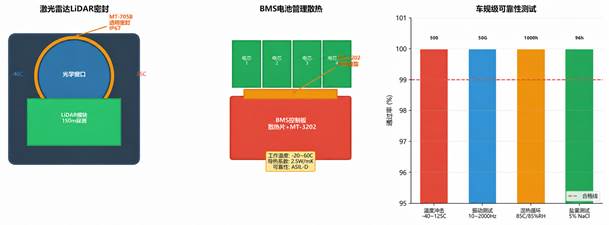
Figure 3-1 ADAS sensor sealing and BMS thermal management solution
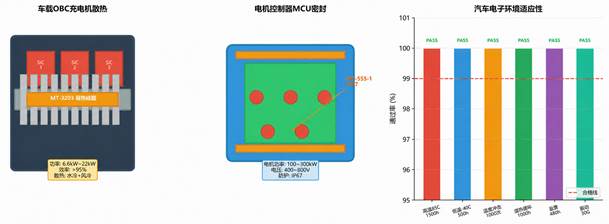
Figure 3-2 On-board charger (OBC) thermal management and MCU sealing
3.1 Battery Pack Structural Bonding Solution
Application areas: cell-to-cell, cell module-to-housing, and top cover-to-enclosure interfaces
Recommended products: MT-1301 silicone structural adhesive | MT-6655 sealant
Application
Recommended Product
Function
Key Requirements
Cell-to-cell bonding
MT-1301
Structural reinforcement and cushioning
Thermal conductivity ≥0.8 W/m·K, flexible elastic bond
Cell-to-base plate bonding
MT-1301
Fixing and temperature equalisation
High bond strength, thermal conductivity 1.0–2.0 W/m·K
Top cover sealing
MT-6655
IP68 / IP69K sealing
Coolant resistant, low VOC, foam sealing
Busbar insulation
Insulation protection and creepage prevention
Withstand voltage ≥3kV, electrolyte resistant
3.2 Battery Thermal Management Solution
Recommended product: MT-3204 thermal grease
Heat Dissipation Path
Recommended Solution
Typical Specification
Expected Temperature Reduction
Cell ⇌ liquid cooling plate
MT-3204 thermal grease
Coating thickness 100–200μm
Interface temperature difference ≤2℃
Module ⇌ bottom housing
TSP thermal pad
2–4mm thickness, 40–60% compression
Equivalent thermal resistance as low as 0.5 ℃·cm²/W
Inter-cell heat dissipation
MT-2808 potting compound filling
Potting gap 3–8mm
Cell-to-cell temperature difference ≤3℃
Busbar heat dissipation
TSP thermal pad
1–2mm, with adhesive backing
Joint temperature reduced by 15℃
3.3 Battery Potting Safety Solution
Application area: inside the battery module, filling gaps between cells
Recommended product: MT-2808 high thermal conductivity flame-retardant potting compound
Function
Method
Performance
Thermal runaway delay
UL94 V-0 flame retardant, self-extinguishing, thermal isolation
Passes thermal propagation test (≥5 min)
Thermal balancing
High thermal conductivity filling of inter-cell gaps
Temperature difference ≤3℃, peak temperature reduced by 8–12℃
Vibration damping
Elastomer absorbs vibration and shock
Meets ECE R100 vibration and shock testing
Water and dust protection
Full encapsulation with no voids
IP68 (1m immersion for 24h)
Electrical insulation safety
High dielectric strength
Dielectric strength ≥18kV/mm, withstand voltage 6kV
Key potting process points:
- After the cell module is placed in the housing, clean off dust and oil contamination
- Calculate dispensing volume based on gap size; limit each pour to ≤30mm thickness
- Use low-pressure assisted potting to avoid entrapped air bubbles
- Pre-cure 4h at room temperature, then full cure at 80℃ × 2h
- After curing, withstand voltage test ≥3kV with no breakdown
4. E-Drive System Solutions
4.1 Traction Motor Thermal Management Solution
Application areas: stator winding end turns, hairpin winding weld joints, magnet-to-rotor core interface
Location
Recommended Product
Function
Process
Stator end winding
MT-2803 thermally conductive potting compound
Heat dissipation and winding fixation
Impregnation / trickle potting + heat cure
Hairpin weld joints
Insulation protection and corrosion prevention
Selective coating
Magnet bonding
MT-1301 structural adhesive
High-strength fixation, demagnetisation prevention
Heat cure at 80℃ / 30 min
Housing coolant channel sealing
MT-6655 sealant
Watertight sealing, coolant resistant
FIPG (formed-in-place gasket)
4.2 Motor Controller Thermal Management Solution
Application areas: interface between IGBT/SiC power module baseplate and heat sink; DC-link capacitor cooling
Recommended product: MT-3204 high thermal conductivity grease
Parameter
MT-3204
Industry Requirement
Assessment
Thermal conductivity
3.7 W/m·K
≥3.0
Exceeds ✓
Thermal resistance (100psi)
0.045 ℃·cm²/W
≤0.1
Excellent ✓
Oil bleed (175℃/24h)
<0.3%
≤1%
Excellent ✓
Operating temperature
-55℃~250℃
-40℃~175℃
Ample margin ✓
Ionic content (Cl⁻ + Na⁺)
≤15ppm
≤50ppm
Clean ✓
Viscosity
320,000 cP
Matched to dispensing equipment
Adjustable ✓
4.3 OBC / DC-DC Potting Solution
Application area: inside on-board chargers (OBC) and DC-DC converters. Recommended product: MT-3803 two-component thermally conductive potting compound
Technical requirements:
- Low ionic content: reduces the risk of ion migration
- Low-stress cure: protects BGA solder joints and sensitive components
- High thermal conductivity: supports 6.6kW–22kW power density cooling
- UL94 V-0 flame retardancy: meets automotive safety requirements
5. Electronic Control System Solutions
5.1 VCU / Domain Controller Thermal Management Solution
Application area: between the main SoC (e.g. 8155/8295) and the heat-dissipating housing. Recommended product: MT-3202 thermal grease
Comparison Item
MT-3202 thermal grease
Thermal conductivity
2.0 W/m·K
Applicable gap
50~200μm
0.5~5mm
Application method
Stencil printing / dispensing
Pad placement
Reworkability
Requires cleaning and re-application
Can be re-applied
Recommended use
Flat mating surfaces, high-volume automated production
Multiple chips with height variation, low-volume production
5.2 PCB Conformal Coating Protection Solution
Application area: PCBs of body controllers such as VCU, BCM, gateway and T-Box
Automotive-grade protection requirements:
- Moisture resistance: 85℃/85%RH for 1000h, insulation ≥100MΩ
- Salt spray resistance: 144h neutral salt spray with no blistering or delamination
- Fungus resistance: ASTM G21, grade 0 (military standard)
- Thermal shock resistance: -40℃ ↔ 125℃, 500 cycles with no cracking
- Coating thickness: 30–80μm, uniform and consistent
- UV tracer: coverage visually inspectable under 365nm UV light
6. Smart Cockpit and Automotive Lighting Solutions
6.1 Smart Cockpit Thermal Management Solution
Application Area
Heat Source
Recommended Solution
Key Requirements
Instrument cluster / centre display
Backlight driver IC, GPU
MT-3202 thermal grease
High viscosity, non-slump
Head-up display (HUD)
DLP / DMD chip
MT-3204 thermal grease
High thermal conductivity 3–5 W/m·K
MT-3202 thermal grease
Thin-layer coating
6.2 Automotive Lighting System Solution
Application areas: LED matrix headlamps, tail lamp light modules, driver modules
Application
Recommended Product
Technical Requirements
LED light source cooling
MT-3202 thermal grease
Thermal conductivity ≥2.0 W/m·K, temperature resistance 150℃
Driver module potting
MT-2803 potting compound
Room-temperature cure, UL94 V-0 flame retardant
Lamp housing sealing
MT-6655 sealant
IP69K waterproofing, UV weather resistance
Lens bonding
MT-705B structural adhesive
Light transmittance ≥90%, low shrinkage
7. ADAS and Sensor System Solutions
7.1 Millimetre-Wave Radar Solution
Application areas: radome bonding, PCB potting, heat dissipation
Application Area
Recommended Product
Key Specifications
Radome bonding
MT-1301 (low dielectric)
Dielectric constant ≤2.8, Df ≤0.005
PCB potting protection
MT-2803 low-stress grade
Hardness Shore A 20–30, reworkable
Back-end heat dissipation
MT-3202
Thermal conductivity 2.0 W/m·K, low ionic content
Housing sealing
MT-6655
IP69K water and dust protection
7.2 LiDAR Solution
Application areas: potting of laser emitter and receiver modules, optical lens bonding. Recommended product: MT-4203 gel-type potting compound (ultra-low stress, reworkable)
Key characteristics:
- Ultra-low modulus: cured elastic modulus <0.1MPa, zero impact on optical alignment
- Ultra-low shrinkage: cure shrinkage <0.1%
- High transparency: visible light transmittance >92%
- Reworkable: the gel can be mechanically removed for easy repair
- Wide temperature range: optical stability from -50℃ to 200℃
7.3 Camera Module Solution
Application areas: camera module potting, lens holder bonding, image sensor cooling. Recommended products: MT-3803 (low stress) / MT-3202
8. Selection Guide and Technical Data Comparison
8.1 Quick Selection Matrix
Application
Primary Requirement
Recommended Product
Alternative Product
Battery pack structural bonding
High strength + thermal conductivity
MT-1301
MT-2808
Battery potting and cooling
Flame retardancy + thermal conductivity
MT-2808
MT-2803
Cell ⇌ liquid cooling plate heat transfer
Low thermal resistance + long service life
MT-3204
IGBT / SiC module cooling
Ultra-high thermal conductivity
MT-3204
—
OBC / DC-DC potting
Low stress + UL94 V-0
MT-2803
MT-2808
Domain controller chip cooling
Medium-to-high thermal conductivity
MT-3202
PCB conformal coating protection
Moisture + salt spray resistance
—
LiDAR potting
Low stress + reworkable
MT-4203
MT-2803
Motor stator potting
Thermal conductivity + fixation
MT-2803
—
Lamp module cooling
Thermal conductivity + temperature resistance
MT-3202
Millimetre-wave radar sealing
Low dielectric constant + IP69K
MT-6655
MT-1301
Camera module protection
Low stress + anti-fogging
MT-4203
8.2 Thermal Product Selection Map
Thermal material selection principles for automotive electronics: Die level (gap <100μm) → thermal grease MT-3204 / MT-3202 Chip level (gap 0.1–0.5mm) → thermal pad TSP-100/200 Module level (gap 0.5–5mm) → thermal pad TSP-300/500 Full encapsulation (multiple components, large gaps) → thermally conductive potting compound MT-3803 / MT-2808
9. Competitive Advantages
9.1 Technical Advantages
Automotive-grade quality control: IATF 16949 process-wide quality management with full batch traceability
Low-ion technology: proprietary purification process, Cl⁻/Na⁺/K⁺ ≤10ppm, eliminating electrochemical migration
Low volatility and low odour: VDA 270 odour ≤ grade 2.5, VDA 277 total carbon ≤30μgC/g
Custom formulation: viscosity, cure speed, hardness and colour tailored to the customer's equipment and process
Full-chain testing: thermal cycling (-55℃ to 175℃), damp-heat ageing, thermal shock, corrosion and vibration
9.2 Quality Advantages
Quality Metric
Common Industry Standard
Maxtor Control Level
Batch Cpk
≥1.33
≥1.67
Thermal conductivity tolerance
±0.2 W/m·K
±0.15 W/m·K
Viscosity tolerance
±20%
±10%
Hardness tolerance
±10 Shore
±5 Shore
Ionic content
≤100ppm
≤10ppm (Grade 3 water)
Colour variation
ΔE≤2.0
ΔE≤1.0
10. Case Studies
Case 1: Pack potting for a leading traction battery manufacturer
Customer background:
A top-2 Chinese traction battery manufacturer, prismatic aluminium-can cells, CTP architecture
Requirement:
Inter-cell gap potting meeting UL94 V-0, thermal conductivity ≥1.0 W/m·K and 15-year vibration durability
Solution:
Customised MT-2808 formulation with an optimised flame-retardant system to reduce cost
Results:
- Cell-to-cell temperature difference reduced from 5.5℃ to 2.5℃
- Passed nail penetration testing and 3,000 thermal cycles
- Annual consumption exceeded 500 tonnes
- Became a Class A supplier to this customer
Case 2: E-drive cooling upgrade at an NEV OEM
Customer background:
A well-known Chinese NEV manufacturer, 200kW e-drive platform
Requirement:
SiC module cooling bottleneck; junction temperature had to be reduced by 20℃ with thermal resistance ≤0.05 ℃·cm²/W
Solution:
MT-3204 replaced an imported thermal grease brand
Results:
- SiC junction temperature reduced by 22℃; peak power increased by 15%
- Thermal resistance rose only 2.5% after 4,000 thermal cycles
- Cost reduced by 30%; lead time shortened from 12 weeks to 3 weeks
Case 3: ADAS domain controller cooling solution for a Tier 1 supplier
Customer background:
An international Tier 1 supplier, Qualcomm Snapdragon Ride platform domain controller
Requirement:
The SoC thermal material had to meet AEC-Q qualification, deliver 3.0 W/m·K and withstand at least 5 rework cycles
Solution:
Results:
- SoC core temperature reduced by 18℃
- Passed AEC-Q qualification and the Tier 1's internal standards
- Awarded global nominated supplier status for the platform
11. Technical Service System
11.1 Pre-Sales Service
Service
Scope
Response Time
Technical consultation
Product selection and application solution design
Within 2 hours
Free samples
Trial samples matched to customer requirements
Within 24 hours
Application testing
Trial application and testing on customer samples
Within 3 business days
Solution design
Preparation of a tailored application process plan
Within 5 business days
On-site visit
Pre-sales technical exchange and production line review
Arranged within 1 week
11.2 Service During Implementation
- On-site support for first mass production: technical guidance to ensure a smooth ramp-up
- Operator training: standard operating procedures (SOP) and on-site training provided
- Equipment integration: parameter packages for automatic dispensing and potting equipment
- PPAP submission: PPAP documentation package provided in line with IATF 16949
11.3 After-Sales Service
- Quarterly quality review: technical and quality review visit every quarter
- Full batch traceability: samples retained for 5 years with complete production records
- Failure analysis: response within 24 hours with an 8D corrective action report
- Technical upgrades: ongoing VAVE cost-reduction and material upgrade proposals
We are committed to providing the automotive electronics industry with complete professional solutions for thermal management, sealing and potting
 English
  Chinese
  Russian
  Vietnamese